Low HRV, Stomach Pain, and a Slower Run: What I Noticed After 40
This morning, I woke up to a warning from my Garmin watch.
My overnight HRV was lower than usual.
I did not feel sick, and there was no clear sign that something was wrong with my body. Still, when I saw that warning, I knew I should pay a little more attention to how I felt during the day.
Later in the evening, I went out with a simple goal: run for one hour.
I was not planning to run fast. I just wanted to keep the routine going and spend some time moving.
My sleep was not terrible, but it was not ideal either. I slept for 6 hours and 26 minutes, and my HRV was lower than my recent baseline. Even before the run started, that already gave me one message: today might not be the day to push.
But I still wanted to run.
So I went out and began as usual.
At first, everything seemed normal. But after about 1 kilometer, I started to feel pain in my stomach. I think the reason was simple: I had eaten dinner too late.
The discomfort came on strongly enough that I knew pushing through at my normal pace would not be a good decision.
So I changed the plan.
Instead of chasing pace, I slowed down.
Instead of trying to make the run feel strong, I tried to make it feel manageable.
Instead of fighting my body, I listened to it.
In the end, I still completed the run.
My Garmin data from the run looked like this:
- Actual distance: 8.03 km
- Impact load distance: 8.31 km
- Total time: 1:00:04
- Running time: 59:50
- Average pace: 7:29/km
- Average heart rate: 131 bpm
- Max heart rate: 170 bpm
- Training effect: Base
- Aerobic effect: 2.7
- Training load: 61
Objectively, this was not an impressive run.
My Garmin performance score even showed a low rating, and my body clearly was not in peak condition. But I do not think that means the run was a bad one.
Actually, it turned into a meaningful run for a different reason.
Because I had to slow down, I started to notice things I usually miss.

There were flowers blooming quietly along the path.
They were not dramatic or extraordinary. They were just there, waiting to be seen. I have probably passed them many times without really noticing them.
And then there were the bridge lights.
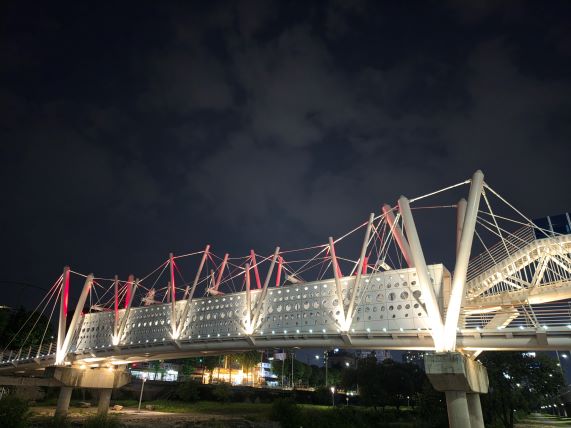
I have run past those lights over and over again. But tonight, because my pace was slower and my attention was less fixed on performance, they looked different. The reflections, the glow, and the stillness of the scene felt more beautiful than usual.
That was the unexpected gift of this run.
Today’s discomfort changed my pace.
And the slower pace changed what I could see.
If I had felt great, I might have run harder.
If I had run harder, I might have missed those small details again.
So even though the run started with a warning and included some pain, it ended with a reminder:
Not every run has to feel strong to be valuable.
Some runs teach effort.
Some runs build fitness.
Some runs test discipline.
And some runs teach you to slow down enough to notice what has been there all along.
Running after 40 is not only about distance, pace, or training effect.
It is also about paying attention to the body, adjusting when necessary, and sometimes discovering that a slower run can show you more than a faster one ever could.
Tonight, I did not get the run I expected.
But I may have gotten the run I needed.
 Running After 40
Leave a comment